
December 11, 2025
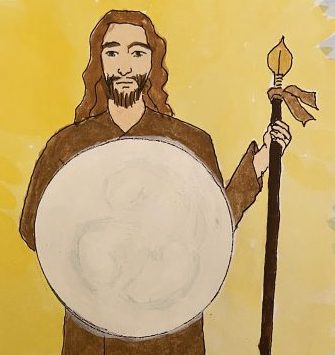
Yesterday at centering prayer practice, in prayer I saw Jesus first pushing me away, then beckoning me closer, then again turning his back on me. And yet he was always there. The message was that whether in life or in spiritual practice, whether feeling closer or further away from God, believing oneself to be accepted or rejected by our beloved, is merely a construct of the conceptual mind. In fact, God is always there in relationship with us, even if it doesn’t feel the way we are expecting. This can be quite puzzling for practitioners, when they reach a place of stillness and peace. Seemingly, nothing is happening. But beneath it all is great stillness and peace. Simply give up and abide in that bedrock of peace, that cessation of trying and effort, that stillness like the earth in winter.
St. John of the Cross explains this perfectly in his writing about the Dark Night of the Soul. Here it is best to quote from Fr. Richard Rohr’s newletter, in which he in turn copies Mirabai Starr’s translation of St. John of the Cross as follows:
“John of the Cross describes the doubt that disrupts a soul in the dark night, when all sense of knowing God is absent. Mirabai Starr translates from John’s classic work Dark Night of the Soul:
The deep suffering of the soul … comes not so much from the aridity she must endure but from this growing suspicion that she has lost her way. She thinks that all spiritual blessing is over and that God has abandoned her. She finds neither support nor delight in holy things. Growing weary, she struggles in vain to practice the [prayer methods] that used to yield results.
John of the Cross encourages those experiencing this dark night to trust the silence that comes when we surrender our need to speak to God using words:
This is no time for discursive meditation. Instead, the soul must surrender into peace and quietude, even if she is convinced she is doing nothing and wasting time. She might assume that this lack of desire to think about anything is a sure sign of her laziness. But simple patience and perseverance in a state of formless prayerfulness, while doing nothing, accomplishes great things.
All that is required here is to set her soul free, unencumbered, to let her take a break from ideas and knowledge, to quit troubling herself about thinking and meditating. The soul must content herself with a loving attentiveness toward God, without agitation, without effort, without the desire to taste or feel [God]. These urges only disquiet and distract the soul from the peaceful quietude and sweet ease inherent in the gift of contemplation being offered.
The soul might continue to have qualms about wasting time. She may wonder if it would not be better to be doing something else, since she cannot think or activate anything in prayer. Let her bear these doubts calmly. There is no other way to go to prayer now than to surrender to this sweet ease and breadth of spirit. If the soul tries to engage her interior faculties to accomplish something, she will squander the goodness God is instilling in her through the peace in which she is simply resting….
The best thing for the soul to do is to pay no attention to the fact that the actions of her faculties are slipping away…. She needs to get out of the way. In peaceful plentitude, let her now say “yes” to the infused contemplation God is bestowing upon her…. Contemplation is nothing other than a secret, peaceful, loving inflow of God. If given room, it will fire the soul in the spirit of love.”
Fr. Richard Rohr’s newsletter is published on the Center for Action and Contemplation website, Surviving Doubt — Center for Action and Contemplation.
That is all for today.
 Contemplative Prayer Journal